
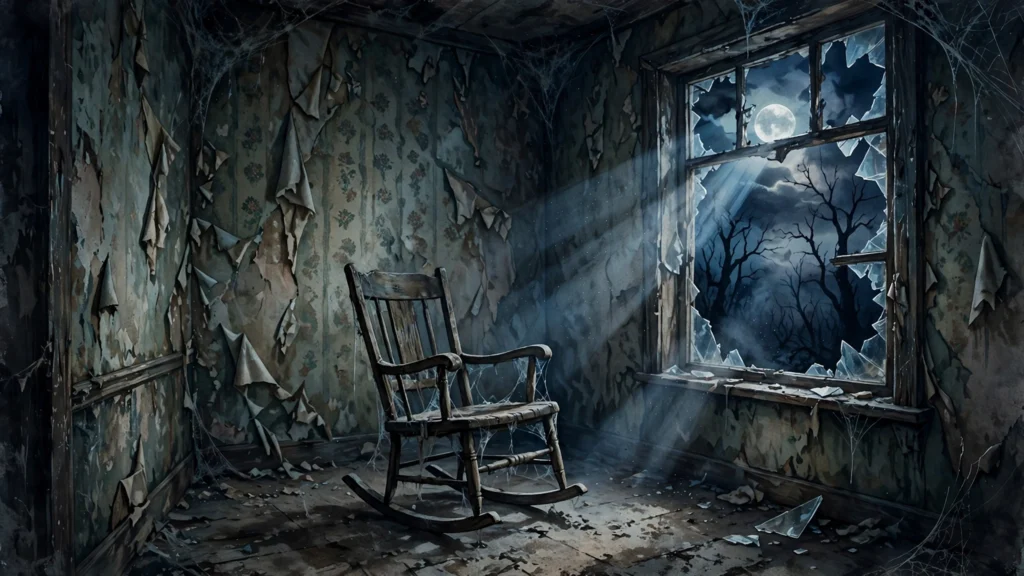
The granny game story is never told to you — there are no cutscenes, no dialogue, and no opening text explaining why an old woman has locked you in her house. DVloper built the narrative out of rooms, objects, and one terrifying rule: she hears everything. So this explanation separates three things most articles blur together — what the game actually shows, what the wider Slendrina series establishes, and what fans have filled in themselves. Each part below is labelled.
What the Game Shows You Directly
Here is everything the game states outright, through play rather than words. You wake up in a dark bedroom in a house you do not recognise. The front door is locked with multiple mechanisms — boards, a padlock, an electronic lock. You have five days. An old woman is hunting you through the house, and she reacts to sound: drop a plate, step on a creaking board, open a door too carelessly, and she comes. There are bear traps. There is a car in the garage, incomplete, that can be repaired. There is a shotgun you can assemble. And when the fifth day ends without an escape, she executes you — the scene varies, and none of them are merciful.
That is the whole script. Everything else — who she is, why the house is like this, who you are — is inference. Notice, though, how much the design implies before any lore is added: the locks are on the inside, the traps are maintained, the car is deliberately disabled. This is not a house someone stumbled into. It is a house prepared for prisoners, by someone who has done this before. The official Google Play listing sells this purely as a horror escape game — the excavation is left to you.
Who Is Granny?
In this game she has no name beyond “Granny,” no voice lines, and no stated motive. The identity comes from DVloper’s earlier work: Granny is a character from the universe of the Slendrina games, the developer’s previous horror series. Across that series, the family tree is established — Slendrina is the ghostly central figure, Angelene is Slendrina’s mother, and Granny is Angelene’s mother: Slendrina’s grandmother. When DVloper made her the star of her own game in 2017, she arrived with that history attached — which is why longtime players treat her as a cursed bloodline, not a random monster.

What kind of being is she, in this game? The games never say the words “ghost” or “undead,” but they show you the evidence. She cannot be killed — a shotgun blast or a trap knocks her out for a short while (longer on easy difficulties, barely a pause on Extreme), and then she is simply back. She moves between floors faster than any ordinary person should. The most accurate statement the evidence supports: Granny is a supernatural predator wearing the shape of an old woman, tied to the same curse that runs through Slendrina’s family. You can see the official presentation of the game on its Steam page.
One more direct connection hides inside this game itself. Find the teddy bear and pick it up, and Slendrina appears — a brief, silent cameo, gone when you look away. It is an easter egg with a message: this house sits inside her family’s world, and she is watching it too.
The House Is the Real Storyteller
If Granny will not talk, her house will. Read room by room, it sketches a life — and a pattern.
The ground floors are a decayed family home: kitchen, dining room, a child’s playhouse in the garden, a hidden room behind boxes. The basement and the areas below it are something else — a prison in all but name, and in the game’s later version a flooded sewer, reached through the house’s depths, holding a cage. Inside that cage in the 1.8 update sits a small child. The game never names the child on screen; fans widely identify it as Slendrina’s child, kept by her great-grandmother — an interpretation that fits the family lore, not a caption the game gives you. The sewer itself arrived with version 1.8, and the old versions compared page shows how much the house grew between the first release and now.

Then there are the traces of the people before you. A car in the garage that someone was clearly trying to fix and flee in — disabled before they could. A guillotine in the garden area, an object with exactly one purpose. Scattered belongings, a hidden weapon, rooms arranged to funnel a running person. The story the house tells is repetitive by design: you are not the first prisoner. You are simply the latest, and the five-day limit is her routine, not a game convention — nobody, the endings suggest, has ever needed a sixth day.
The Endings and What They Imply
The game has three outcomes, and each one is a piece of story.
The door escape. You strip the locks one by one and walk out the front door into the dark. It is the quietest ending and the most telling: the way out was always the front door, behind locks you could see from day one. She was never hiding the exit. She was daring you to reach it.
The car escape. You repair the garage car — battery, spark plug, fuel, key — and drive through the garage door. This ending explains the disabled car: it is a previous victim’s unfinished work, or bait she leaves because repairing it keeps prisoners busy, noisy, and hopeful. Either reading makes her worse.
The game over. Fail on day five and the execution scene plays — players have been guillotined, thrown from the top of the house, or run down, depending on the version and the run. These scenes confirm the house’s implication: prisoners who run out of days are not released, ever.
None of the endings add new names, dates, or explanations. DVloper ends every route the same way the game began — with questions intact.
The Wider Series in One Minute
Granny is one game in a connected run of DVloper titles — separate games, not chapters of this one:
| Game | Released | What it adds to the story |
|---|---|---|
| Granny | 2017 | The house, the five days, Granny herself |
| Granny: Chapter Two | 2019 | Grandpa — deaf, but hits harder — and a baby in the house: the family, still growing |
| Granny 3 | 2021 | A mansion instead of the house, Grandpa returns, and Slendrina appears in person |
Chapter Two’s baby matters most to the lore: a grandchild exists, small enough to need feeding, in a house run by the same family. It strengthens the reading of the caged child in this game’s sewer as the next generation of the same line — still, strictly, a reading. The latest version and mod status page tracks what the current build of the original game contains.
Fan Theories — Clearly Labelled
Everything in this section is theory. None of it is stated by the games; it is the community stitching gaps.
Theory 1: Granny was once ordinary, and grief broke her. The family line is soaked in death — Slendrina died young in the series’ backstory, and the family never recovered. On this reading, Granny’s hunting is a curse or a madness that began with that loss, and the house is where it festers.
Theory 2: You are not a random victim — you came to the house. Some fans argue the player character is a thief who broke in, or someone searching for a missing person who vanished into the house earlier. It would explain starting inside and unarmed. The game gives it no direct support; it survives because it fits the silence.
Theory 3: The prisoners are food, or fuel, for whatever the family has become. The maintained traps, the guillotine, the cage, and a child kept below the house feed a darker theory: that the family’s supernatural survival needs victims. It is the most popular explanation for why the hunting never stops — and the one with the least evidence.
How the Story Feeds the Gameplay
The lore is not decoration; it explains the mechanics. She hunts by sound because the story’s Granny is a predator in her own territory, not a guard following rules. The house is full of other people’s escape attempts because you are meant to feel replaceable. Knowing the routes matters more than knowing the lore, though: our escape walkthrough turns both endings into step-by-step routes, and a mod menu build — freeze her, walk freely — is genuinely the best way to explore the sewer, the cage, and the hidden rooms at story-reading pace instead of panic pace. If you go that route, run the checks on the safety page first; unofficial files deserve thirty seconds of suspicion.
Frequently Asked Questions
Is Granny based on a true story?
No. Granny, her house, and the Slendrina family are fiction, created by the Swedish developer DVloper. No real person or real case inspired her in any documented way — the “based on a true story” claims on social media are engagement bait.
Is Granny a ghost or a human?
The games never label her. What they show — she cannot be killed, only knocked out briefly; she moves impossibly fast; she is bound to Slendrina’s cursed family — points to something supernatural wearing a human shape. “Ghost” is too small a word; “undead predator” is closer to the evidence.
Who is the child in the sewer cage?
The game does not say. The child appears in the sewer added by the 1.8 update and is never named on screen. The common fan identification — Slendrina’s child, making Granny its great-grandmother — is plausible and widely accepted, but it is an interpretation, not a confirmed credit.
Do the endings change the story?
No. Both escapes end the same story from different doors, and the game-over endings simply close your run. Nothing you choose rewrites who Granny is or what the house is; the series continues the family’s story in separate games instead. If you want to see each ending yourself, the escape walkthrough covers both routes step by step.
Is Granny really connected to Slendrina?
Yes — that part is not a theory. Same developer, same universe: Granny is Slendrina’s grandmother in the family the earlier games established, and Slendrina herself cameos in this game if you pick up the teddy bear. The connection is deliberate; only the details are left dark.
Why does Granny attack everyone who enters the house?
The game never explains her motive, which is the point. The evidence suggests territory and ritual — the locks, traps, and five-day routine of a predator who has done this many times. Every fuller answer you have read anywhere, including grief and the family’s curse, is theory built on that silence.
Final Word
The story of Granny is a house, a family, and a five-day silence — and it works because DVloper refuses to explain it. What is confirmed fits on an index card: a cursed grandmother from Slendrina’s line, a prison disguised as a home, and a long line of prisoners you join on day one. Everything richer than that, the games let you build yourself. When you are ready to test the theories in person, the homepage has the current version, the guides collect the practical help, and the same story plays just as well on a bigger screen via Granny Mod APK for PC.